Generative AI: What Are We Getting Wrong?
Generative AI can produce fluent, confident and convincing responses, which can make it easy to assume that it truly understands what it says or that its answers are automatically reliable....
Generative AI can produce fluent, confident and convincing responses, which can make it easy to assume that it truly understands what it says or that its answers are automatically reliable....
Current AI systems can produce impressive results, but their capabilities still come with important limitations. They depend heavily on data, can generate convincing but incorrect information and may struggle when...
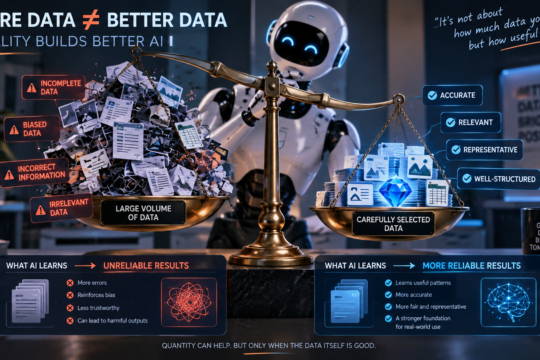
Training AI is not simply a matter of collecting as much data as possible. The information used needs to be accurate, relevant, representative and well structured, because models learn patterns...
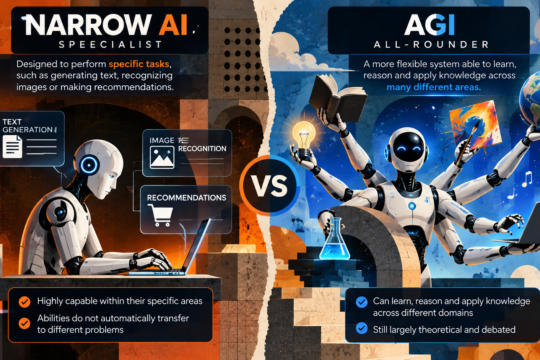
Most AI systems today are designed to perform specific tasks, such as generating text, recognizing images or making recommendations. They can be highly capable within those areas, but their abilities...
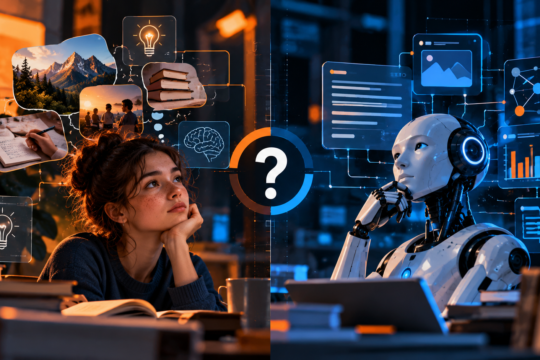
Today's AI can produce remarkably human-like responses, but that does not mean it learns or thinks in the same way people do. AI systems identify patterns in data and use...
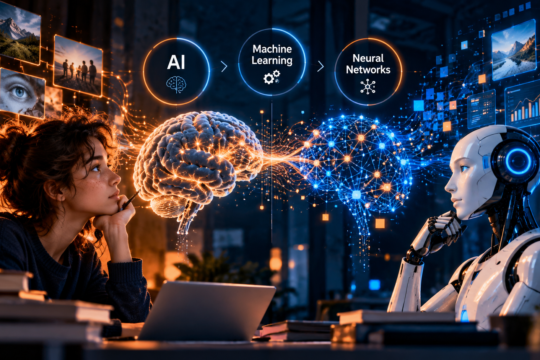
AI, machine learning and neural networks are related concepts, but they describe different levels of the same field. AI is the broadest term, covering systems designed to perform tasks associated...
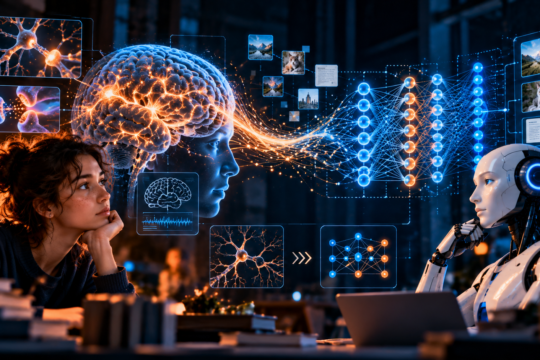
Neural networks are AI models made up of interconnected mathematical units, or "neurons", that process information through layers. During training, the connections between these units are adjusted as the network...
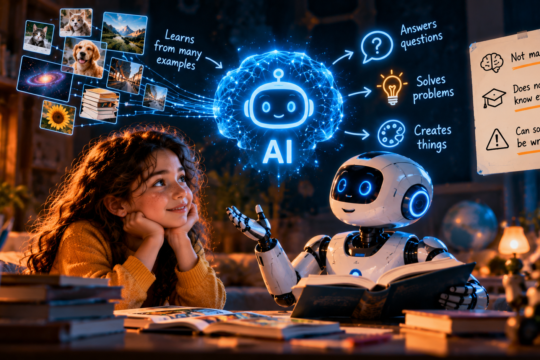
Explaining AI to a child means turning a complex technology into something familiar and understandable. It can be described as a smart digital helper that learns patterns from many examples...