“Alexa, Siri, Google — What Do You Know When I’m Not Talking?”
You walk into your living room late at night, exhausted. You say, “Hey Google, turn off the lights.” Lights dim. You don’t think twice. But behind that convenience lies something far more unsettling: the possibility that your smart assistant is learning, listening, profiling you — even when you’re asleep.
These devices promise to be helpful, responsive, and silent until needed. But as research is increasingly revealing, they may also harbor a darker role: quietly collecting data, shaping what you see, nudging your decisions, and compromising your private life.
Let’s peel back the curtain.
Always Listening — The Illusion of Silence
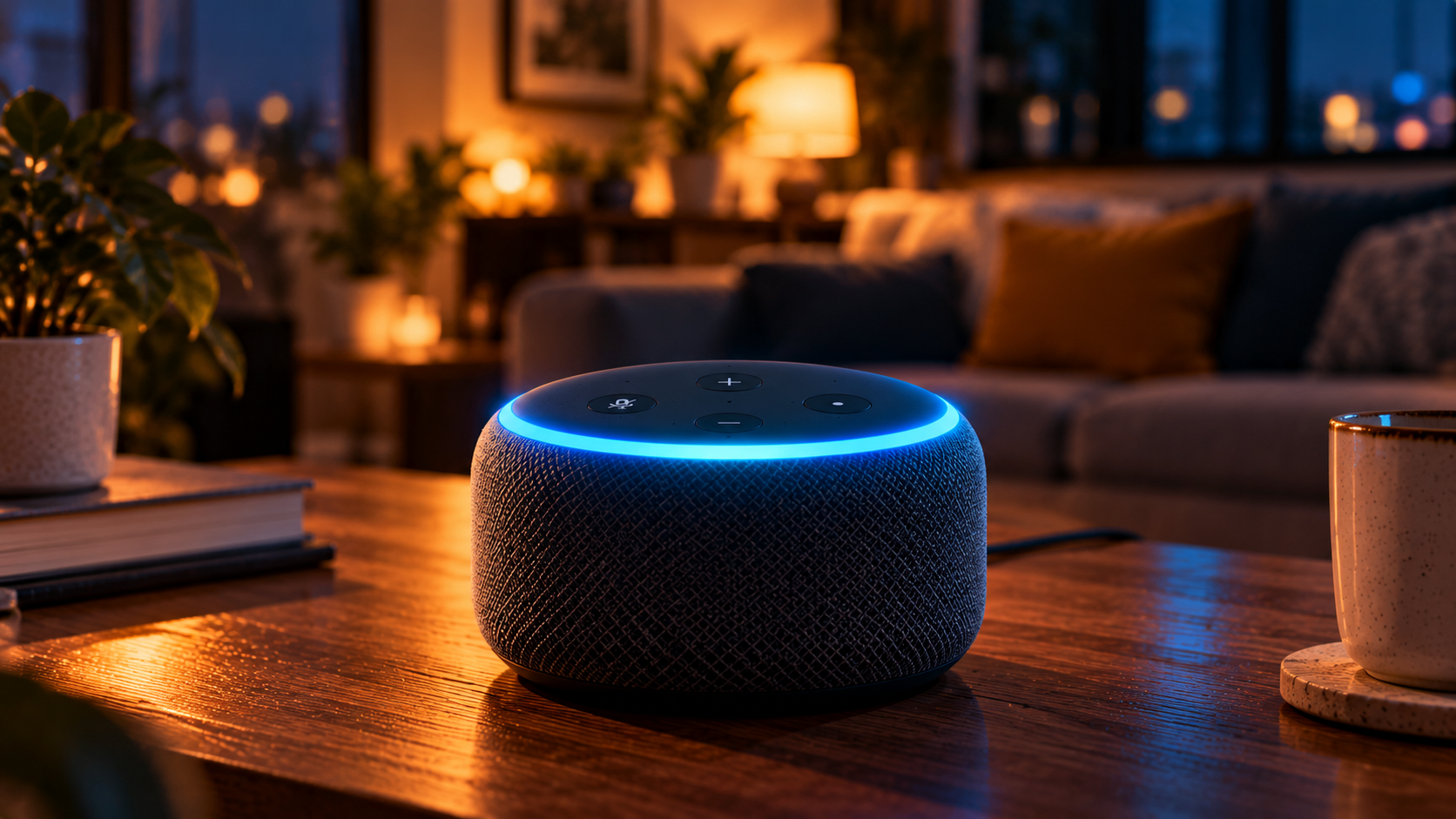
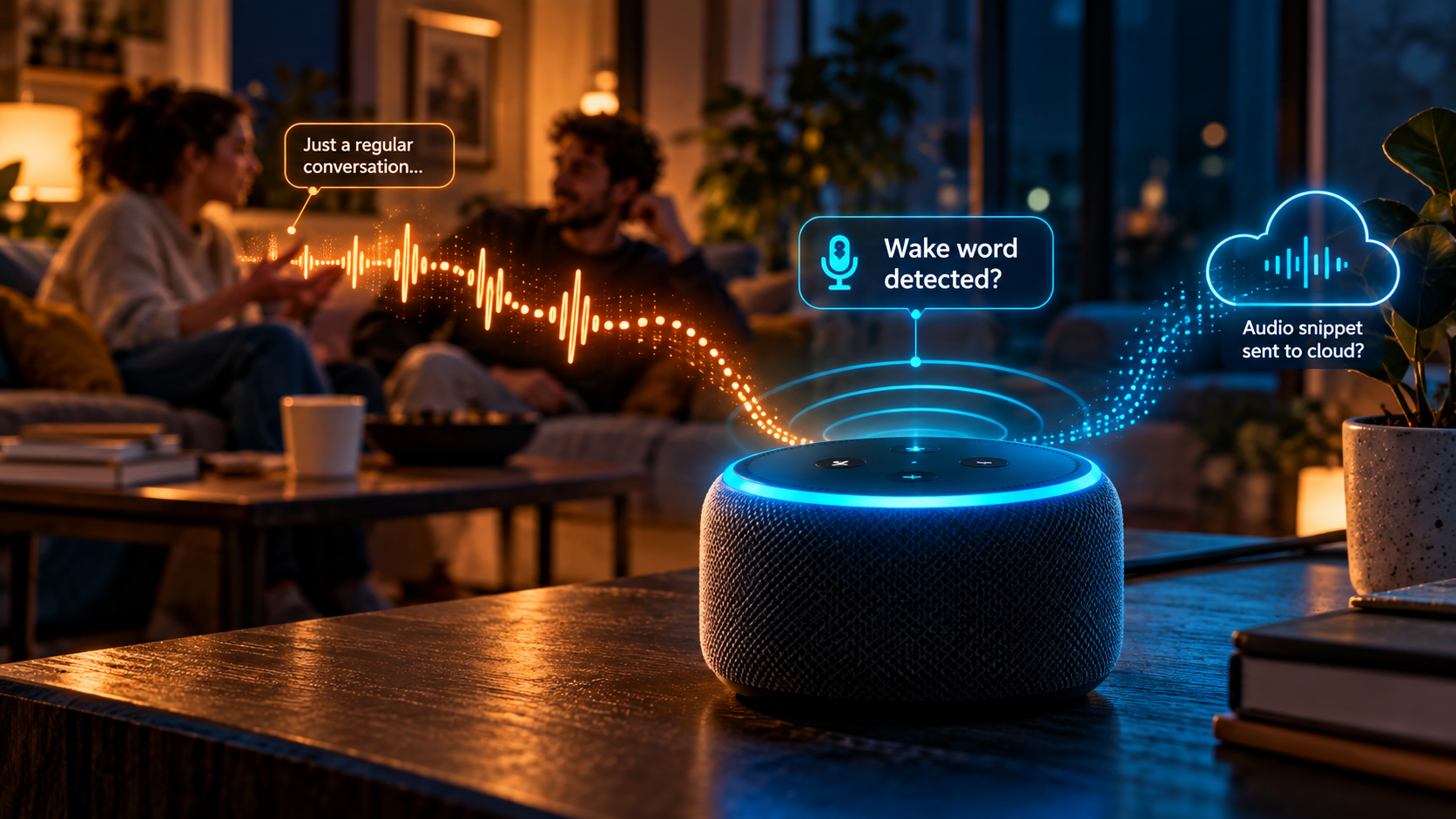
Smart assistants don’t broadcast everything you say. Yet the microphone is “on” in a dormant, listening mode nearly all the time, waiting for a trigger — “Hey Siri,” “Alexa,” or “OK Google.”
- In daily-use studies, users often assume devices are off until activated. But in fact, they passively monitor ambient sound to detect wake words. Secure Data Recovery+1
- Worse, “false activations” — accidental triggers — are not rare. In one robust analysis, hundreds of unintentional triggers were identified across multiple smart speakers, meaning real conversations could be partly recorded and sent to the cloud “by mistake.” arXiv
It’s not paranoid to imagine your device overhearing snippets of private moments. And often, it does — whether it’s a whispered side conversation, a TV show playing in the background, or background chatter.
Profiling You — From Your Commands to Your “Interests”
Once queries are captured, what happens next?
A joint research project led by UC Davis, University of Washington, and others found that Amazon’s Echo devices don’t just process requests — they infer user interests and then monetize those inferences for ad targeting. engineering.ucdavis.edu
In their experiment, researchers created different “personas” (for example, “Fashion & Style” or “Health & Fitness”) and had each persona ask the assistant relevant questions. Based on that, Amazon deduced user inclinations — and the personas that reflected real commercial sectors received advertising bids up to 30× higher than a “vanilla/neutral” baseline profile. engineering.ucdavis.edu
Similar work from Northeastern University confirms: Alexa, Siri, and Google Assistant collect and use profile data to target users across devices. Northeastern Global News
In simpler terms: your assistant hears your health- or lifestyle-related queries, or even your music preferences — and builds a profile around you. That “helpful suggestion” may be less about assistance and more about persuasion.
What Do They Collect — Beyond the Voice
We often think: “they only collect what I say.” But evidence shows the data harvested is far broader:
- Metadata: timestamps, device type, location, ambient noise context.
- Usage patterns: how often you talk, at what times, in which rooms, with which devices.
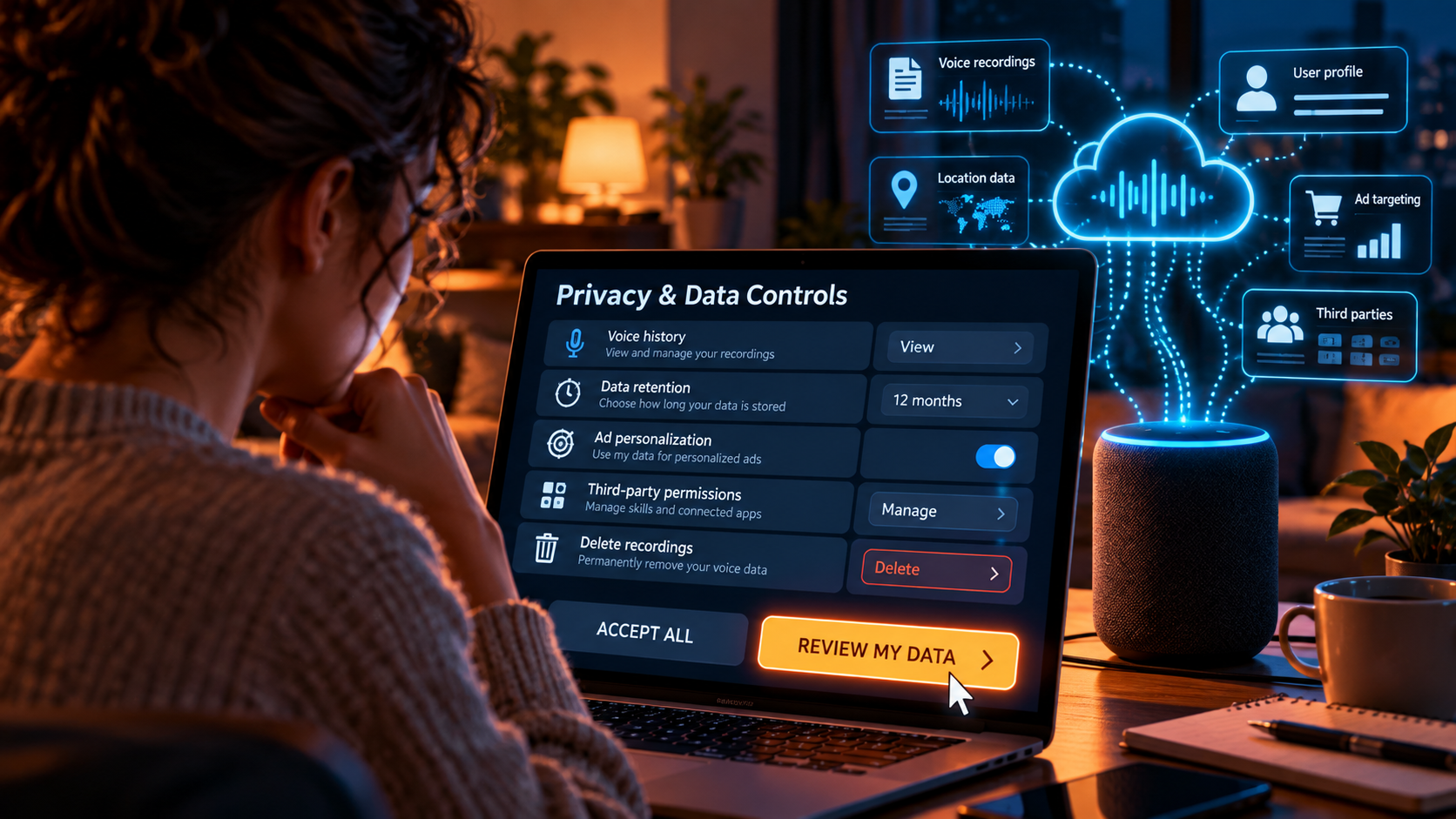
- Third-party skill/app behavior: those “apps” (Alexa “Skills”) you install may ask for additional permissions and access your data. A survey of over 199,000 Alexa skills found ~43% had over-permissive or problematic access requests. arXiv
- Linking across devices: by using cross-device tracking and matching user profiles across your phone, TV, smart speaker and more, a fuller behavioral map emerges. Уикипедия
- Network and local IoT data leakages: in “smart homes” studies, devices may inadvertently expose identifiers (MAC addresses, UUIDs, device names) on local networks, enabling household fingerprinting. Some homes become as uniquely identifiable as 1 in 1.12 million smart homes. engineering.nyu.edu
- Historical logs, transcripts: recordings and transcripts may be stored indefinitely (or long term) for further analysis, often beyond what users expect or understand. Federal Trade Commission+2ScienceDirect+2
From a single voice command to a cascade of data points — the scope is massive.
Ethics, Accountability & Law: The Fog
Lack of Transparency & Consent
One of the gravest faults is that users rarely have clear, real consent. Many companies bury data practices in long, jargon-filled privacy policies. In several FTC complaints, Amazon was criticized for retaining voice recordings, making deletion difficult, and for allowing unnecessary human access to them. Federal Trade Commission
Amazon later updated its statements to acknowledge use of Echo data for ad targeting — but only after research exposed the practices. engineering.ucdavis.edu+1
Legal Exposure & Subpoenas
Your assistant’s data is not immune to legal demands. In court cases, voice assistant logs have been subpoenaed and used as evidence. tandfonline.com
Moreover, law enforcement could push for broader access, especially when voice data becomes seen as a “recording” of your private space. Few jurisdictions have fully clarified the laws governing such data.
Bias, Discrimination & Profiling
Machine learning systems ingest user data and may reinforce biases. Secret algorithms might suggest differential pricing, ad offers, or services based on inferred socioeconomic, gender, or racial traits — without oversight.
Also, accidental triggers or mis-recognitions may disproportionately affect certain accents, languages, or speech patterns, which can skew profiling and access. arXiv+1
Ethical Slippery Slopes
- Normalization of surveillance: When we accept that “someone is always listening,” the concept of privacy erodes.
- Erosion of agency: If suggestions and nudges can be tailored to your inferred personality, autonomy in decision-making is compromised.
- Data as power: Corporations controlling these data flows wield enormous influence over public opinion, consumer behavior, and even political persuasion.
Real-World Incidents: When Things Go Wrong
- Amazon lawsuit over recording private conversations: A long-running class-action claim alleges that Alexa illegally records more than just commands, capturing private dialogue without explicit consent. Amazon denies deceptive practices, saying Alexa listens only after wake words and only a fraction of recordings are reviewed by humans. Reuters
- Bug exposing voice history: Security researchers uncovered vulnerabilities where Alexa servers could leak entire voice histories, home addresses, and device inventories — though fixes were later issued. WIRED
- Risks in third-party skills: Some Alexa “Skills” bypass permission systems through clever or malicious design, thus accessing data beyond what users believe they share. arXiv
- Smart home data overreach: In a 2024 study, Amazon’s Alexa app collected 28 out of 32 data categories (including precise location, contacts, health data) — far more than typical smart home devices. Google’s equivalent collected 22. GlobeNewswire+1
These are not distant hypotheticals. They demonstrate that the “smart assistant in your home” is a high-stakes frontier.
What You Can Do — Protecting Yourself
You don’t have to choose between convenience and vulnerability. Here are actionable steps:
- Review & purge your voice history
Periodically delete recordings and transcripts from your assistant’s dashboard. Many platforms offer auto-delete settings. - Mute the microphone by default
When not in use, mute or disable mic — at least during private conversations or when sleeping. - Opt out of profiling or ad targeting (where possible)
Some platforms or settings allow opting out. Be proactive in tweaking privacy controls. ScienceDirect+1 - Limit third-party skills/apps and permissions
Only enable ones you trust, and reject unnecessary permission requests. - Use network isolation techniques
Put your smart speaker on a separate VLAN or guest network to reduce cross-device exposure. - Stay updated, audit regularly
Firmware and software updates often patch vulnerabilities. Regular audits help catch suspicious behaviors. - Advocate and demand transparency
Write to manufacturers, ask for clarity, support regulation that mandates accountability.
Final Word: Convenience at What Cost?
Smart assistants are wondrous: they play music, read news, adjust your thermostat, and may soon converse with you like real humans. But their intelligence comes from what they absorb — your voice, your patterns, your private moments.
When you sleep, they don’t. And that’s where the shadow lies.
If we remain passive, we surrender our privacy by default. But if we stay informed, skeptical, and assertive, we may regain some agency in a world where our devices know more than we intend.